

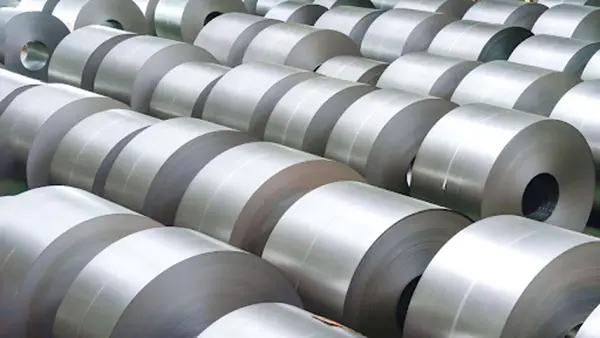
Walk into a modern coil coating plant and the first thing you notice isn’t the noise, it’s the rhythm. Steel and aluminum coils move in a continuous flow, cleaned, coated, baked and rewound within minutes. Every meter is measured and every parameter logged.
Over the past years, I’ve seen a quiet transformation take place. Manufacturers who once often relied on manual spray booths or powder coating cabins now speak in the line speed, film thickness, gloss units and VOC recovery rate. Coil coating isn’t only faster, and it’s cleaner, more consistent and increasingly energy-efficient, thanks to its continuous closed-loop design that minimizes overspray and captures nearly all solvent emissions for treatment.
What still strikes me, even after years in this industry, is how coil coating quietly proves that high-volume manufacturing and environmental responsibility don’t have to conflict. It’s a mindset shift from the finishing parts to engineering performance. Today, coil coating defines the new industrial standard for continuous and closed-loop finishing. From facades and automotive trims to home appliance panels, this process delivers both aesthetic control and environmental accountability. That’s why more engineers or buyers now evaluate coating systems not by brand or color but by lifecycle data, like the durability, waste ratio and energy recovery.
Because at CoatingsDirectory, our goal is to make that choice easier. We connect coating buyers, engineers, and manufacturers with verified technologies, products, and services that match their real-world needs. So it’s written for people who want clarity before commitment – those making real decisions about production, procurement and technology alignment.
Why Choose Coil Coating Over Spray or Powder Coating?
| Factor | Coil Coating | Spray Coating | Powder Coating |
|---|---|---|---|
| Film uniformity | Continuous roll ensures even thickness and gloss | Operator-dependent and variable pattern | Thick build, often uneven edges |
| Material efficiency | ≈ 95 % paint transfer; overspray very low | 60-80 % transfer efficiency | Reclaim possible but contamination risk |
| Environmental impact | Closed-loop exhaust to oxidizer; VOC removal ≥ 95 % | High VOC unless water-borne | Low VOC but requires a large dust-control system |
| Production speed | Typically 80-150 m/min | Batch; slower cycle | Moderate; per-batch cure |
| Energy use | Heat-recovery curing can greatly reduce gas demand | High per part | Large ovens; complex reclaim |
How to Choose the Right Coil Coating?
Once you understand what makes coil coating superior, the next challenge begins, that is choosing the system that truly fits your project. I’ve seen even experienced buyers hesitate here. With so many chemistries, gloss levels and environmental requirements, the line between “good enough” and “over-specified” can be thin. The wrong choice doesn’t just affect appearance; it can also alter a product’s lifetime cost and reliability.
Choosing a coating is less about color charts and more about matching performance to purpose. Over the years, I’ve learned that five questions guide every successful selection, that is how long it needs to last, how much it will flex, how much it costs to maintain, how it complies with regulations and where it will live.
Durability and Weather Resistance
If your panels face rain, UV or salt spray, durability becomes very non-negotiable. Fluoropolymer systems like PVDF remain the gold standard, retaining gloss and color for up to 30 years even in coastal or high-UV zones. For moderate climates, silicone-modified polyester (SMP) offers a great balance between cost and endurance, while polyester (PE) fits interior or appliance use. I often remind my clients: “Don’t over-engineer for the weather you don’t have.” Just like a facade in Oslo doesn’t need the same chemistry as one in Singapore.
Adhesion and Formability
Good adhesion isn’t something you see, and it’s something you feel when the sheet bends. A coil-coated panel should flex with the metal, not crack against it. For deep-draw or roll-forming applications like refrigerator doors or HVAC casings, polyurethane (PU) and high-grade polyester perform best. Reliable suppliers can show T-bend (ASTM D4145) and cross-hatch results proving flexibility. So when I watch a panel pass a 0 T bend without fracture, I know the chemistry and curing are in the perfect harmony.
Cost and Lifecycle Value
Price is the easiest metric to compare and also the easiest to misread. The real cost hides in maintenance, warranty claims and downtime. I’ve seen many factories cut repainting budgets by half simply by moving from standard PE to SMP, not because SMP was cheaper, but because it lasted longer. So think in lifecycle terms, not just the unit price. A coating that performs five years longer doesn’t just save labor; it protects brand trust as well.
| Coating Type | Typical Use | Approx. Lifespan | Relative Cost Index * |
|---|---|---|---|
| Polyester (PE) | Indoor or short-term outdoor | 7-12 years | 1.0 |
| SMP | Mid-range exterior | 12-20 years | 1.3 |
| PVDF | Premium facade or roofing | 20-35 years | 1.8 |
| PU | High-touch or appliance | 10-18 years | 1.4 |
* Aactual pricing varies by region and substrate.
Regulatory and Environmental Compliance
Coatings don’t just protect metal, and they also protect reputations. Exporting to Europe or North America means meeting REACH, RoHS and local VOC limits. Increasingly, buyers also ask whether formulations are PFAS-free or ISO 14001 certified. The best suppliers answer these questions without hesitation because they’ve already invested in cleaner chemistries. When reviewing technical data sheets, I always look for transparency, cause it’s the surest sign of accountability.
End-Use Context and Application Fit
Finally, context decides everything. The same coil that performs flawlessly on a building facade might fail inside a food can. Every application has its own stress factors, like the mechanical, thermal or chemical. Matching chemistry to environment is half science and half empathy for how the product will live its life.
| Application | Recommended System | Key Advantage |
|---|---|---|
| Architectural facades or roofing | PVDF | Exceptional UV and color retention |
| Appliance panels | PE/PU | Smooth finish, high formability |
| Automotive trim or HVAC | SMP/PU | Chemical resistance and flexibility |
| Food-grade packaging | Epoxy/BPA-free | Safe barrier performance |
When I advise my clients, I often draw one simple conclusion, that is the best coating isn’t the most expensive or the newest, and it’s the one that fits. That quiet fit between chemistry, environment and purpose defines a truly smart selection. But choosing the right coating is only the first step. Once it’s on the line, quality control becomes the real test, for example, how well each batch holds up in thickness, gloss and adhesion. That’s where data meets craft and where the next step begins.
How to Check the Quality of Coil Coating?
No coating system earns trust until it’s tested. In coil coating, quality isn’t an afterthought, and it’s the heartbeat of the process. I’ve walked through lines where every meter of coated steel carries a record, like the line speed, bake temperature, viscosity and batch code. The best plants don’t just chase production targets; they would chase consistency. That’s what separates a good coil from a great one.
- Film Thickness.
The first thing I measure on any coil is the film thickness. It’s a very simple check, but it reveals how stable the process truly is. In a properly calibrated line, the primer sits around 4-6 µm and the topcoat 18-20 µm, confirmed by magnetic induction or eddy-current gauges (ISO 2360 or ASTM D7091). When readings drift more than ±1 µm across a sheet, I know the roll gap or coating pressure needs adjustment. Precision here isn’t vanity, but it’s the good signature of process control. - Appearance and Surface Uniformity.
After thickness, I turn to what my eyes see, such as the color, gloss and feel. A premium coil should show no orange peel, no pinholes and a consistent gloss within ±5 gloss units (ASTM D523). Many suppliers also track ΔE color variation (ASTM D2244), keeping it below 1-1.5 for architectural grades. Sometimes I run my fingers across the surface after curing, and I can feel when a line is well-tuned, just like smooth, clean and almost silky. Machines can measure, but touch tells the truth faster. - Adhesion and Flexibility.
Coil coatings live hard lives. They’re bent, stamped and stretched long after they leave the oven. I’ve seen perfect panels fail simply because curing ran 10 °C too low. The surest way to prove flexibility is through 3 key tests:
T-bend (ASTM D4145) – to check the cracking or peeling on tight folds.
Cross-hatch (ASTM D3359) – to test the adhesion under cut stress.
Reverse impact (ASTM D2794) – to confirm the resistance to deformation.
A coating that survives 0 T bending without cracks is a good sign of harmony between chemistry and cure. When I witness that, I know the line team respects the material as much as the output. - Corrosion and Weathering Resistance.
Durability can’t be guessed, and it must be proven. Laboratories simulate years of exposure before the coil ever meets the field. The salt-spray test (ASTM B117) exposes samples to saline mist for hundreds or even up to 1,000 hours. The humidity test (ISO 6270-1) checks for blistering under condensation, while accelerated weathering (ASTM G155) forecasts gloss and color retention under the UV and water cycles. When a supplier can show the independent third-party test reports, it’s not marketing, it’s integrity. I always tell the procurement teams that trust certified data, not adjectives. - Consistency, Documentation and Transparency.
Numbers matter, but honesty matters more. The most reliable suppliers record everything, such as the line speed, bake curve, viscosity, batch ID, and share quality certificates tied to ASTM or ISO test results. I’ve learned that transparency in QC reports predicts reliability in performance. When a partner hides their test sheets, I don’t question the data, and I will question the culture. So transparency isn’t paperwork and it’s proof of pride. - The Human Element.
No matter how automated a line becomes, people remain its conscience. I’ve met many technicians who tap the coil edge just to hear the cured tone, and they’re rarely wrong. They’ll notice a color drift before any spectrophotometer does. These instincts come only from experience, and they give life to the data. Great coil coating happens when automation meets intuition when every operator feels responsible for the gloss that leaves the line.
So checking quality is not just finding faults, and it is confirming harmony. When every test aligns, you will know the system is ready to deliver value, not just volume. But what exactly does that value look like in numbers? The next part explores how much coil coating really costs and why price often tells only half the story.
How Much Does Coil Coating Cost?
Ask ten coating suppliers for a price and you’ll get ten different answers, and each one will be right in its own way. I’ve sat in those meetings, watching procurement managers weigh cents per square meter against years of warranty. The truth is that coil coating cost isn’t fixed, and it reflects chemistry, energy and process efficiency working together. Still, if you’re planning a project, it helps to know what the numbers really mean.
In 2026, the average cost of coil coating generally falls between USD 4/m² and 10/m², depending on the resin type, film build, line speed and regional energy prices. PVDF systems are at the top end for their long-term UV performance, while PE remains the economical choice for indoor or short-term use. Between them are the SMP and PU, each balancing durability and flexibility. I’ve seen projects save thousands not by switching suppliers but by optimizing film thickness and curing efficiency, and the real cost changes inside the process.
1. Resin Chemistry.
The chemistry defines both performance and the energy needed to cure it.
| Resin Type | Typical Cost (USD/m²) | Key Properties | Applications |
|---|---|---|---|
| Polyester (PE) | 4-6 | Economical, moderate durability | Indoor panels, appliances |
| SMP | 6-8 | Improved weathering | Roofing, facades |
| PU | 6-9 | High flexibility, chemical resistance | Appliances, HVAC |
| PVDF | 8-10 + | Premium UV & corrosion resistance | Architectural panels |
I once visited a plant in Malaysia where an old PVDF coating line, even after 25 years, still kept its shine three times better than cheaper options. It cost more at the start, but over twenty years it actually turned out cheaper per year, so that is something most spreadsheets don’t show.
2. Film Thickness and Structure.
More isn’t always better. A 4-6 µm primer + 18-20 µm topcoat typically offers ideal protection. Adding thickness raises paint use, bake time and gas consumption without proportionate gain. And we’ve seen some clients insist on “extra coating for safety,” only to find they paid 20 % more for no measurable benefit. Precision, but not excess, keeps economics balanced.
3. Line Speed, Energy Use, and Technology.
A fast and well-tuned line can cut cost per m² dramatically. Modern coil lines running 80-150 m/min spread fixed energy and labor over larger output. Plants using infrared, induction or hybrid curing may save about 10-15 % energy, especially when paired with heat-recovery. One European supplier I worked with used oven exhaust to preheat incoming air, that is a small tweak that saved around 10-12 % in annual gas use. In such a competitive industry, small efficiencies decide who stays profitable.
4. Regional and Supply-Chain Factors.
Price also changes with the geography.
- Asia-Pacific often achieves the lowest rates, thanks to the integrated steel and coating supply chains.
- Europe tends to be higher, shaped by energy costs and stricter VOC limits.
- North America sits in between, depending on resin availability and logistics.
Add to that pigment volatility, especially titanium dioxide and fluoropolymer resins, and you’ll see why many smart buyers favor long-term contracts over spot purchases. Markets reward stability, but not speculation.
5. Cost or Value?
I’ve watched teams spend weeks chasing the lowest quote, only to lose double in warranty claims two years later. Cheaper coatings are not always cheaper when early chalking or delamination forces repainting. The real measure is cost per year of reliable service, not cost per square meter. I often tell my clients: “If a system lasts twice as long, it doesn’t just save maintenance, and it protects your reputation.” That’s value you can’t price on paper. When suppliers present lifecycle analyses comparing durability, maintenance and energy data, that’s genuine partnership, not marketing.
Behind every figure is a human decision, and there is an engineer adjusting line speed, a chemist balancing solids, an operator fine-tuning oven temperature. Those quiet optimizations decide whether your final cost lands closer to USD 6 or 9/m². I’ve come to believe cost isn’t just economics, and the suppliers who price fairly often manage efficiently and take pride in control.
At this point, cost is a mirror of expertise and discipline. The suppliers who understand that are the ones defining the market. Next, we’ll look at the ten leaders shaping that field and what keeps them at the top.
Top 10 Coil Coating Suppliers and Manufacturers in 2026.
The coil-coating market in 2025 feels both steady and restless – mature in technology but always chasing cleaner and smarter performance. After years following this industry, one truth stands out, that is the best suppliers don’t just sell paint, and they deliver consistency well. They invest in chemistry, control and people. From Europe’s heritage giants to Asia’s new momentum, that same commitment defines the leaders below.
1. AkzoNobel (Netherlands)
AkzoNobel is the global benchmark for coil coating. Its TRINAR (PVDF) and CERAM-A-STAR (SMP) systems set long-standing standards for architecture and roofing. What stands out is its quiet discipline from solvent recovery to bio-based resin development. Every client I’ve met mentions the same thing – the reliability. And it doesn’t follow the trends, and it shapes them through measured innovation and transparent sustainability.
2. PPG Industries (United States)
PPG brings the precision of a century-old coatings pioneer into a data-driven era. Its DURANAR (PVDF) and DURASTAR (SMP) lines cover nearly every architectural and industrial need. In PPG’s labs, color control is digitized, curing analytics are predictive and deviations are measured in microns. That meticulousness keeps PPG synonymous with quality that a brand engineers instinctively trust.
3. Sherwin-Williams (United States)
Since acquiring Valspar, Sherwin-Williams has woven decades of R&D and loyalty into one brand. Its Fluropon (PVDF) and WeatherXL (SMP) systems are the color standard for countless facades. What makes the company remarkable is how it links chemistry with conscience, and investing in renewable raw materials and circular coatings long before ESG became a buzzword. For architects and OEMs, Sherwin-Williams means creative freedom, backed by its science that holds its ground.
4. Beckers Group (Sweden)
Beckers is often called the conscience of the coil-coating industry. Its BeckryTech, BeckryFlex and BeckryTherm ranges deliver strong durability while lowering embodied carbon. I still remember reading its first Life-Cycle-Assessment report years ago, and it redefined how the industry measured sustainability. Beckers leads softly but firmly through data and proof. For buyers who value evidence over promises, Beckers feels like home.
5. Axalta Coating Systems / Dura Coat (United States)
The integration of Dura Coat into Axalta forged a strong North-American powerhouse. Its Durapon 70 (PVDF) and Ceranamel (PE/SMP) dominate the roofing and siding markets. I once toured its California plant, which is very compact, precise and obsessed with color matching. That agility is Axalta’s edge – speed without compromise.
6. Nippon Paint Holdings (Japan)
Nippon Paint continues expanding across Asia-Pacific, blending chemistry mastery with manufacturing discipline. Its coil coatings cover appliances, architectural and industrial panels, emphasizing energy-saving cures and functional finishes such as anti-fingerprint or anti-corrosion. Japanese precision runs through every batch that engineers who adjust ovens by instinct before sensors blink.
7. Jotun (Norway)
Better known for marine coatings, Jotun has quietly built regional strength in the coil coating across the Middle East and South Asia. Its systems are made for punishing climates, like the humidity, sand and heat, but retain gloss and color year after year. The secret lies in its people – regional teams delivering European-grade coatings with local responsiveness. Steady, calm and utterly reliable.
8. KCC Corporation (South Korea)
KCC embodies Korea’s industrial DNA – pragmatic, fast and detail-driven. Its fluoropolymer, polyester and SMP systems serve both architectural and industrial markets. What impresses me most is the turnaround speed – quotes become shipments in days, but the quality never slips. That balance of pace and precision defines KCC’s reputation.
9. Yung Chi Paint & Varnish (Taiwan)
Yung Chi may fly under the radar globally, but within Asia’s OEM networks it stands for quiet dependability. Serving appliance, furniture and construction segments, it delivers consistent color and adhesion even under high-volume pressure. Its steadiness makes it a favorite among so many long-term partners.
10. Jindal Coated Steel & JSW Paints (India)
India’s coil-coating sector is surging, and these integrated producers lead the way. By combining steel-substrate production with coil-coating lines, they cut logistics costs and tighten process control – key in a scale-driven market. Their focus on polyester and SMP systems for roofing and infrastructure shows how India is building not just capacity but capability. The next decade’s breakthroughs may well start here.
Across continents, one pattern holds that the top players don’t just perfect coatings, and they perfect discipline. In every factory visit, I’ve seen the same quiet pride. That, more than price or polish, is what keeps them at the top.
After years of watching this industry change, I’ve come to see the coil coating not as a process, but as a philosophy of precision to proof that manufacturing can be efficient and responsible at once. Every advance from high-speed curing to solvent recovery, has moved the field closer to a smart balance of performance and sustainability.
What makes the market different today is how intelligence and intention converge. New resin chemistries, energy-efficient curing and AI-driven analytics no longer compete with environmental goals, and they enable them. Factories once measured success by speed and yield, now it’s measured by carbon balance, transparency and trust. It’s a quiet revolution led by engineers, chemists and operators who treat precision as a form of respect for the material itself.
Still, the progress means little without purpose. The market will keep shifting as the energy costs, supply chains or environmental policies rewrite the rules. But the companies that endure are those that see coil coating as a system of collaboration, innovation and accountability, not just the paint.
At CoatingsDirectory, our goal is to help more professionals lead this landscape with clarity, connecting all buyers, engineers and manufacturers to verified coating technologies and partners who share the same standards of quality and integrity. Because the more transparent this industry becomes, the stronger it grows.
FAQs
What is the main advantage of coil coating over spray or powder coating?
The biggest advantage is process control. Coil coating applies paint to flat metal before shaping, so every square meter gets an even and factory-controlled finish, and no runs, missed spots or rework. The entire sequence happens continuously on one moving line (cleaning, pretreatment, priming, top-coating, curing, cooling). Compared with conventional spray or powder processes, it’s faster, cleaner and up to 30 % more material-efficient with lower VOC emissions and energy use.
How long does coil-coated metal last outdoors?
Typically most coil-coated panels last 20 years or more, and high-performance PVDF systems often reach 30-40 years in good conditions. Actual lifespan depends on resin type and environment:
- PVDF retains the color and gloss best in coastal or high-UV climates;
- SMP balances cost and durability for common exterior use;
- PE works well indoors or in the mild climates.
Regular cleaning and preventing mechanical damage help extend service life well.
How do I choose the right coil coating for my application?
Start by thinking about where and how your metal will be used.
- For strong UV or chemical exposure, choose the PVDF.
- For moderate weather and flexibility, the SMP is ideal.
- For indoor or budget-sensitive projects, the PE fits.
Then match formability to your forming process and check local VOC or PFAS regulations. And you always need to consider total lifecycle cost, not just upfront price.
How can I check if a coil coating is high quality?
You can look for an even film, good adhesion and a consistent gloss without ripples or haze. Also, the reliable suppliers can provide test results, such as the T-bend (ASTM D4145), cross-hatch (ASTM D3359), impact (ASTM D2794), and salt-spray (ASTM B117), greatly proving durability and flexibility. If these meet ASTM or ISO standards, and if the substrate preparation and curing are correct, you’re looking at a coating system built to last.
What types of coil coatings are most widely used today?
This market mainly relies on 3 resin families:
- The PVDF – highest UV and chemical resistance for facades and roofs.
- The SMP – medium-cost, weather-resistant coating for exterior panels.
- The PE – the economical option for interior or short-term outdoor use.
Meanwhile, water-based, UV-curable and high-solid systems are gaining ground as the much cleaner and low-energy alternatives.