


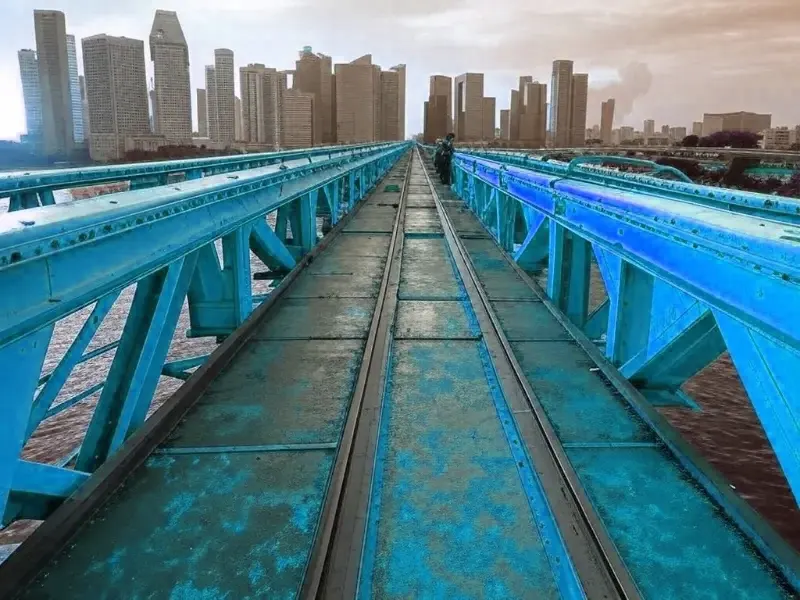
It often becomes clear what bridge coating truly means only when you stand close enough to see the way steel changes with time. Fresh steel looks strong, almost permanent, but anyone who has returned to the same bridge after a few years knows how fast moisture, salt and pollution can mark its surface. I have seen beams that began with only a thin brown line eventually develop pits deep enough to demand structural assessment. When you witness that progression more than once, you stop thinking of coating as the “paint” and start seeing it as the first line of defence for an entire asset.
What Is Bridge Coating
Bridge coating is a protective system designed to slow or prevent the corrosion that naturally occurs when steel and concrete face the open environments. It creates a controlled barrier between the material and the elements that damage it. The system may look simple from a distance, but every layer serves a specific function. Some layers block oxygen and moisture, others use sacrificial metal particles to shift the corrosion reaction away from the steel and some shield the structure from ultraviolet light, abrasion or chemical exposure.
The role of a bridge coating goes far beyond appearance. It stabilises the structural reliability of the bridge, allows inspections to identify early issues without interference, supports predictable maintenance planning and helps reduce lifecycle costs when aligned well with environmental conditions. In public infrastructure, where bridges must perform for decades under the heavy loads and strict regulatory oversight, a rigid coating system is part of ensuring long-term safety. This is why transport agencies and engineering teams treat coating selection and maintenance as key components of bridge asset management rather than surface finishing work.
A good coating system also includes practical advantages for operations. It resists cracking under constant vibration, maintains adhesion through temperature swings and slows the spread of corrosion when small damages occur. On concrete bridges, coatings help control carbonation and chloride penetration, protecting rebar from hidden corrosion that can lead to spalling. Whether used on a steel girder, a concrete deck edge or a cable-stayed pylon, coating is a tool that combines chemistry, engineering judgement and compliance requirements into a single protective envelope.
Anyone who has reviewed some old bridge maintenance files knows how differently coating systems behave once exposed to the real environments. Two bridges may share the same design but age in totally different ways simply because their coating systems respond differently to salt, sunlight, humidity or industrial pollution. I have seen some projects where a well-matched coating has kept steel clean for a decade, while a nearby bridge with a less suitable system needed major repairs after only three years. Those contrasts make it clear that bridge coatings are not interchangeable. They follow distinct chemistries and protective mechanisms, and understanding these differences is essential before comparing performance or cost.
Bridge coatings generally fall into two broad categories. Some serve the visual and basic protective function often associated with painting. Others belong to the engineered protective coatings designed for corrosion control under harsh outdoor exposure. Within these categories, several well-established systems appear repeatedly across major infrastructure projects because they offer predictable performance, clear test data and long records of field use. And the following systems represent the core technologies most commonly used in bridge construction and rehabilitation.
What Are the Main Types of Bridge Coating Systems
Zinc-rich coating systems.
Zinc-rich coatings are widely used on steel bridges because they keep protecting the metal even when the paint surface gets light scratches or small chips. The zinc inside the coating often “takes the hit” first, then slowing down rust and keeping the steel underneath safe. This makes them very useful in the coastal or industrial areas where steel rusts faster. These coatings usually act as the first layer in a multi-coat system and need proper surface preparation to perform well. Many transport departments trust them because they have been tested in many real projects for decades.
Epoxy primer + polyurethane topcoat systems.
This two-layer combination is one of the most common choices for bridges around the world. Because the epoxy primer sticks firmly to the steel or concrete and blocks out water and chemicals. And the polyurethane topcoat protects the surface from sunlight, colour fading and weather damage, keeping the bridge looking stable for many years. Together, they can create a strong and reliable system that performs well in harsh sunlight, freeze-thaw cycles or some areas with heavy wear. So engineers often choose this combination because it lasts long, is practical to apply and has many certified products available on the market.
Solvent-free coating systems.
Solvent-free epoxies are becoming more popular in repair projects and in tight spaces where ventilation is limited. They form thick and even layers and can handle slightly damp surfaces better than many traditional solvent-based paints. Because they contain very little solvent (close to zero), they release fewer emissions and help workers achieve the required film thickness quickly during short maintenance windows. These systems are often used on bridges over water or in busy city locations where environmental rules are strict and airflow is limited.
Polysiloxane coating systems.
Polysiloxane coatings offer excellent resistance to sunlight and weathering. They hold their colour and surface finish even in strong UV conditions where conventional polyurethane may slowly lose gloss. Many transport agencies usually use polysiloxane topcoats in long-term projects because they help delay the need for appearance or protection-related maintenance. They also tend to handle common pollutants better than many older topcoat systems.
Thermal spray metal coatings (TSA/TSZ).
Thermal spray coatings show up often on bridges that face strong salt spray or harsh industrial air. I have walked under some coastal spans where the painted areas showed normal ageing, but the thermal-sprayed sections still looked surprisingly steady. These metallic layers bond tightly to the steel and keep protecting it even if the surface gets small scratches. The application requires skilled crews, but many long-span or hard-to-reach bridges would choose TSA or TSZ because they stay reliable for a very long time with limited maintenance.
Duplex coating systems.
Some bridges use a mix of thermal spray and organic coatings, often called a duplex system. I have seen this chosen when owners want the corrosion resistance of TSA or TSZ but still need colour, gloss or UV protection on the surface. In practice, the metal layer handles corrosion while the epoxy or polyurethane top layers take care of weathering. This combination is very common on structures designed for long service intervals or in places where frequent closures for maintenance are difficult.
Understanding the strengths of each system makes later decisions on cost, standards and suitability far smarter. Once the protective mechanisms become clear, it becomes easier to recognise which system fits a coastal highway, a mountain bridge, an urban overpass or a long-span river crossing.
Most coating decisions become much clearer once a government approval framework enters the process. Public infrastructure projects rarely rely on marketing claims or generic industrial data. They follow lists maintained by transport authorities, shaped by years of field performance, accelerated testing and inspection feedback. I have seen contractors change systems overnight simply because a state DOT updated its qualified products list. In this environment, the question is not “what coating is good” but “what coating has already proven itself under similar conditions and is officially recognized by the authority overseeing the project.”
Several well-established approval systems exist in many regions. Their structure varies, but their purpose is the same, that is to reduce risk, simplify tendering and ensure the chosen materials can meet the long-term performance expectations of public agencies.
Transportation bridge coating systems
United States Department of Transportation (DOT) Systems.
Across the United States, each state DOT maintains its own qualified products list (QPL) for bridge coatings. Commonly approved systems include zinc-rich primers combined with epoxy intermediates and polyurethane or polysiloxane topcoats. These combinations have shown the reliable performance across inland freeze-thaw regions, industrial zones and coastal environments.
Products from some major international manufacturers commonly appear across different state QPLs because their data packages remain consistent across regions. Before approval, coatings undergo tests for salt spray performance, UV resistance, adhesion, abrasion and long-term weathering. Projects supported by federal or state funding often require strict compliance with these lists.
Japan MLIT Approved Systems.
Japan’s Ministry of Land, Infrastructure, Transport and Tourism (MLIT) follows a structured approval process built on decades of bridge monitoring. Many MLIT specifications use multi-layer systems based on the inorganic zinc-rich primers, high-build epoxies and polyurethane topcoats. These systems can offer strong resistance to UV exposure, moisture, chloride-rich coastal air and seismic stress.
Manufacturers such as Nippon Paint, Kansai Paint and Chugoku Marine often supply these systems because they meet Japanese Industrial Standards and pass the ministry’s performance testing. Evaluations typically reflect Japan’s demanding coastal and high-humidity environments.
China Transport and Infrastructure Agencies.
Transport and infrastructure agencies in China commonly use systems built around epoxy primers, epoxy intermediate coats and polyurethane or fluorocarbon topcoats for long-term durability. These systems are widely applied on expressway bridges, river crossings and large interchanges. In coastal or high-humidity regions, inorganic zinc-rich primers or high-solids coatings are selected to extend maintenance intervals.
Approval usually depends on laboratory testing, documented project performance and evaluation by engineering consultants. Both international brands and qualified domestic manufacturers supply systems that meet the requirements of major public works.
| Region | Authority | Common Approved System Types | Environmental Focus | Typical Bridge Applications |
|---|---|---|---|---|
| United States | State DOTs | Zinc-rich primer with epoxy and polyurethane or polysiloxane | Multi-climate durability, corrosion control | Highway bridges, river crossings, urban structures |
| Japan | MLIT | Inorganic zinc-rich plus epoxy and polyurethane | UV exposure, coastal humidity, seismic conditions | Coastal bridges, urban viaducts, steel truss bridges |
| China | Transport agencies | Epoxy primer and intermediate with polyurethane or fluorocarbon topcoat | Salt spray, humidity, industrial pollutants | Expressway interchanges, sea-crossing bridges, urban elevated roads |
Government-approved systems reassure stakeholders that each layer in the coating system has been tested under familiar conditions. These approvals not just reduce the technical uncertainty but also streamline procurement and inspection.
