


Early in my career, I believed that any coating strong enough for a steel plant would easily handle a bridge. That belief disappeared after my first year of field inspections. I still remember standing under a coastal highway bridge where the girders carried a coating marketed for heavy industrial use. The same product performed flawlessly on inland storage tanks, but here it showed early blistering and thin rust lines spreading from the welds. The difference was very clear. The bridge moved, flexed and reacted to its surroundings in ways a fixed industrial structure never would. That day changed how I compared coating systems.
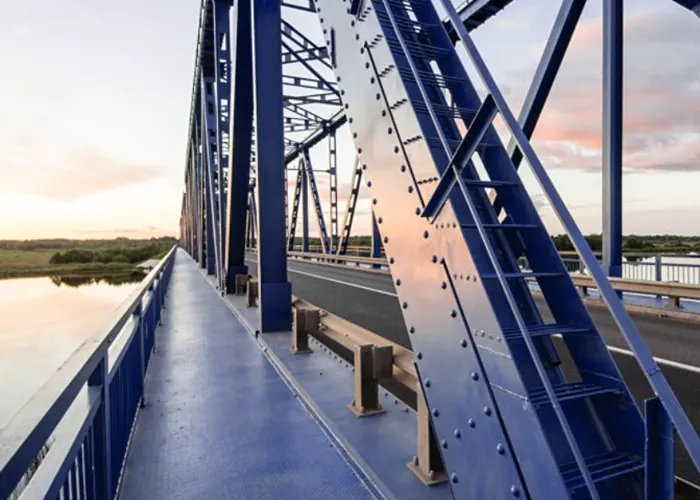
Bridge coatings vs General Steel Structure Coatings
Bridge coatings and general steel structure coatings aim for the same outcome, that is to protect steel from corrosion, but the forces acting on them diverge sharply once the structure is in service. General steel structures usually sit indoors or in semi-protected areas, so their coatings handle moderate humidity, predictable pollutants and normal temperature swings. Bridges face a much harsher reality, for example, traffic loads create constant vibration, joints expand and contract throughout the day, the sunlight hits directly for long hours and salt-laden winds can reach far inland. These conditions demand coatings with stronger adhesion, tougher films and greater tolerance for micro-movement.
Design expectations also differ. A warehouse beam can show wear without immediate concern, but a bridge is a public asset inspected regularly. Even small defects matter because they may signal deeper corrosion. This is why bridge coatings follow stricter durability classes and environmental categories under standards like ISO 12944 or AASHTO guidance. Multi-coat systems, defined film thicknesses and compatibility rules are part of bridge design culture, that is far more strict than what most general steel structures require.
Application conditions expose another major difference. Many general steel coatings are applied indoors during fabrication, where temperature, humidity and access are consistent. Bridges rarely offer that comfort. Crews work in open air, over rivers, across long spans or under decks where airflow, moisture and dust complicate every stage. I have watched experienced applicators fight shifting winds while spraying a high-span bridge – conditions no shop environment ever has to face. A system that performs well in controlled settings can deteriorate quickly when humidity rises or when curing is interrupted by unexpected weather.
Maintenance brings the contrast into sharper focus. Repairing a factory column may take only a few hours with little impact. Repairing a bridge often requires night-time closures, traffic control and elevated safety costs. Because of this, bridge coatings prioritise longer service intervals, stronger UV resistance and higher corrosion tolerance. So lifecycle cost matters more than the initial price because every maintenance window affects operations and budgets.
Despite all these differences, both categories share the same foundation, that is the clean surfaces, proper preparation and skilled application. Both may use zinc-rich primers, epoxy intermediates and polyurethane or polysiloxane topcoats. These similarities often mislead newcomers into thinking the systems are interchangeable. They are not. The margin for error on bridges is smaller, and the consequences of a mismatch escalate quickly into safety, scheduling and cost issues.
Recognising these distinctions makes selection far clearer. Bridge coatings are not simply heavier-duty versions of general steel coatings. They are engineered for movement, exposure and long-term public responsibility. After understanding it, the next step is choosing the right system for a specific project.
A few years ago, I reviewed a steel bridge that had gone through a repainting cycle far earlier than expected. The team had tried to save money by choosing a mid-tier coating during construction. It looked fine when new, but by the fifth year inspectors were already reporting underfilm corrosion along the diaphragms and light chalking in areas with strong sunlight. Repairs required lane closures, night shifts and a budget that climbed far beyond the original estimate. Inside the agency, the project became a quiet reminder that coatings may look similar on paper, but the wrong choice reveals itself slowly, and then all at once. Choosing correctly is never just about brand or colour. It’s about understanding what the bridge will face over its lifetime and matching the system accordingly.
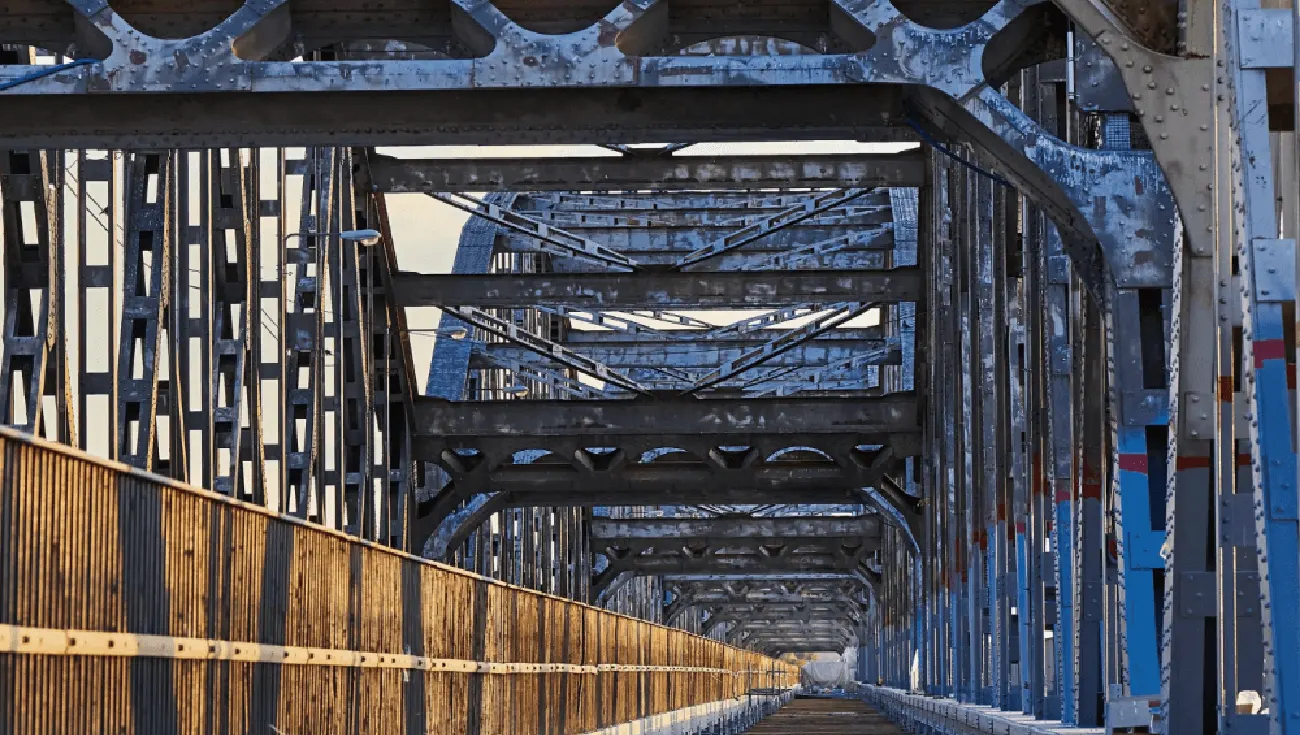
How to Choose the Right Bridge Coating
Selecting the right coating follows a sequence of questions rather than just a single decision. Every bridge behaves differently, and its environment dictates how quickly materials age. Once the teams look at the structure, the exposure, the way maintenance can actually be done, along with the preparation limits, project requirements and the service life they expect, clearer patterns start to appear and the suitable systems become much easier to identify.
- Bridge Type as the Starting Point.
Steel bridges place some of the highest demands on coatings because they move. Connections shift, girders flex under traffic and surfaces vibrate across long spans. Coatings must tolerate micro-movement, cover weld profiles and resist long-term mechanical stress. This is why zinc-rich primers paired with epoxy intermediates and polyurethane or polysiloxane topcoats are commonly used for steel bridges, and they combine strong adhesion with balanced barrier and weathering performance.
Concrete bridges have different priorities. Their coatings must resist carbonation, moisture ingress and chloride penetration, especially near deck edges and splash zones. So high-build epoxies or polyurethane barrier systems are often preferred. Cable-stayed and suspension bridges introduce mixed interfaces, such as the steel, concrete and cable anchor zones, each requiring coatings suited to their specific exposure. - Matching Environmental Exposure.
Where the bridge stands often matters more than its structural form. A coating that lasts decades inland may struggle in a coastal C5-M environment where salt levels stay high year-round, cause high humidity accelerates blistering and underfilm corrosion. Industrial corridors introduce acidic pollutants that demand stronger chemical resistance. Mountain regions create steep temperature swings that drive expansion and contraction far more aggressively.
Projects in harsh environments often justify systems built around zinc-rich primers, high-build epoxies or UV-resistant topcoats, so understanding the local climate and its corrosion category is one of the strongest predictors of long-term coating performance. - Maintenance Strategy and Feasibility.
A coating is easier to control during new construction. Maintenance coatings face far tougher conditions, such as the partial surface preparation, tight access, traffic restrictions and unpredictable weather. If the bridge crosses a river, a rail corridor or a busy expressway, working windows may be short and abrasive blasting severely limited.
In these scenarios, solvent-free epoxies or moisture-tolerant primers can offer practical advantages. They build protective film quickly, tolerate imperfect conditions and resist disruptions caused by the humidity or sudden weather changes. Systems with long recoat windows also help crews adapt when conditions shift unexpectedly. - Balancing Budget with Lifecycle Expectations.
Lower upfront cost is tempting, but bridges rarely reward short-term savings. Lifecycle cost is the true metric, because every maintenance event brings traffic disruption, safety planning and additional labour. Therefore, coatings with higher durability classes, correct corrosion-category matching and strong topcoat weathering resistance typically reduce total cost per service year. And many experienced project teams often compare coatings by long-term performance and service intervals rather than by initial procurement price. - Surface Preparation Limitations.
Another factor that shapes selection more than people realise is how clean the steel can actually get. I’ve worked on bridges where everyone agreed the ideal system needed near-white blasting, but the site simply wouldn’t allow it – the span crossed water or traffic restrictions made full containment impossible. In those cases, the coating choice has to match the preparation level the crew can truly achieve, not the level shown in a perfect specification.
Some high-build epoxies or moisture-tolerant primers can handle partial preparation better, while others depend on shop-grade blasting to survive. When teams understand the preparation window early, many later failures never appear. - Regulatory and Project Requirements.
Project rules can narrow the choices long before anyone compares technical data sheets. I’ve sat in meetings where the preferred system had to be dropped because VOC limits for an urban project were too strict, or because the transport authority only accepted coatings listed on its qualified products list. Some bridges sit near water sources or protected zones where overspray and emissions face stricter controls.
These requirements aren’t obstacles, and they just simply define the pool of systems that can perform reliably and compliantly for that project.
A thoughtful selection process avoids many of the failures commonly found during inspections. When the engineers and project owners evaluate them together, the most suitable systems become much easier to identify. And once teams understand what a coating must achieve, the next step becomes clearer, that is examining the performance criteria that determine whether a system can protect the structure reliably over time.
I often get asked why the same manufacturers keep appearing in bridge specifications across different countries. The answer becomes very clear once you compare inspection reports or speak with crews who maintain bridges year after year. A small group of suppliers shows up repeatedly because their products consistently survive tough conditions, pass strict approval processes and maintain stable quality over long stretches of time. This is not about branding. It is the result of field performance, reliable testing data and ongoing cooperation with transport authorities. When a coating holds up under salt spray, heavy vibration or strong UV exposure, the industry takes notice and the specification lists reflect that.
The manufacturers below are widely referenced in bridge and heavy-infrastructure projects. Each one provides systems with proven track records, strong technical data and real-world credibility across different climates and design requirements. This list is not a ranking; it highlights the suppliers most trusted in this field.
Sherwin-Williams.
Sherwin-Williams coatings appear frequently in United States DOT projects. Many of their zinc-rich primers, epoxies and polyurethane or polysiloxane topcoats meet qualification requirements across multiple states. Their systems perform reliably in regions with strong UV exposure and large temperature swings. Inspectors often note the stable dry film build and long-term colour retention, which help maintain predictable maintenance cycles. Also, many rehabilitation projects in North America usually use their high-build epoxies because of their performance in the demanding environments.

Sherwin Williams-logo
PPG.
PPG supplies protective coatings for infrastructure projects worldwide. Their bridge-focused systems combine strong barrier protection with solid UV resistance, making them suitable for both inland and coastal structures. Their history in industrial, marine or transportation coatings provides a broad performance database. And the epoxy and polyurethane combinations from PPG show up frequently in some tender documents where global availability and balanced durability are key requirements.

ppg-logo
Jotun.
Jotun‘s reputation in marine and offshore environments translates naturally to coastal and sea-crossing bridges. Their coatings can offer strong resistance to chloride exposure, humidity and harsh weathering. In countries with long coastlines or humid climates, many engineers often specify Jotun systems for their durability in C5-M environments. Also, their polysiloxane topcoats are preferred when projects require long-term colour and gloss retention.

Jotun-logo
AkzoNobel.
AkzoNobel‘s protective coatings are widely used on bridges, industrial plants and offshore structures around the world. Their inorganic zinc-rich primers and epoxy barrier systems have a long track record of performance. These systems appeal to teams that require strong compliance data, predictable formulation behaviour and technical support that spans multiple regions.

Akzo Nobel logo
Hempel.
Hempel coatings are common in marine, port and offshore sectors, which makes them a strong choice for bridges exposed to saltwater or high humidity. Their high-build epoxies and weather-resistant topcoats are often used on coastal highway structures and long-span crossings. Many engineering firms value their durability in aggressive environmental categories and their strong presence in key maritime markets.
The above manufacturers appear in bridge specifications not because of their marketing visibility, but because their systems can deliver reliable performance across harsh environments. Their products consistently pass the qualification processes set by transport agencies and align with some standards such as the ISO 12944, AASHTO and MLIT requirements.
